
Some people with heart failure have an increased risk of dangerous heart rhythm disturbances. For selected patients, an implantable cardioverter-defibrillator (ICD) provides additional protection by detecting and treating potentially life-threatening arrhythmias. The decision to implant an ICD requires an individual assessment by a cardiologist.
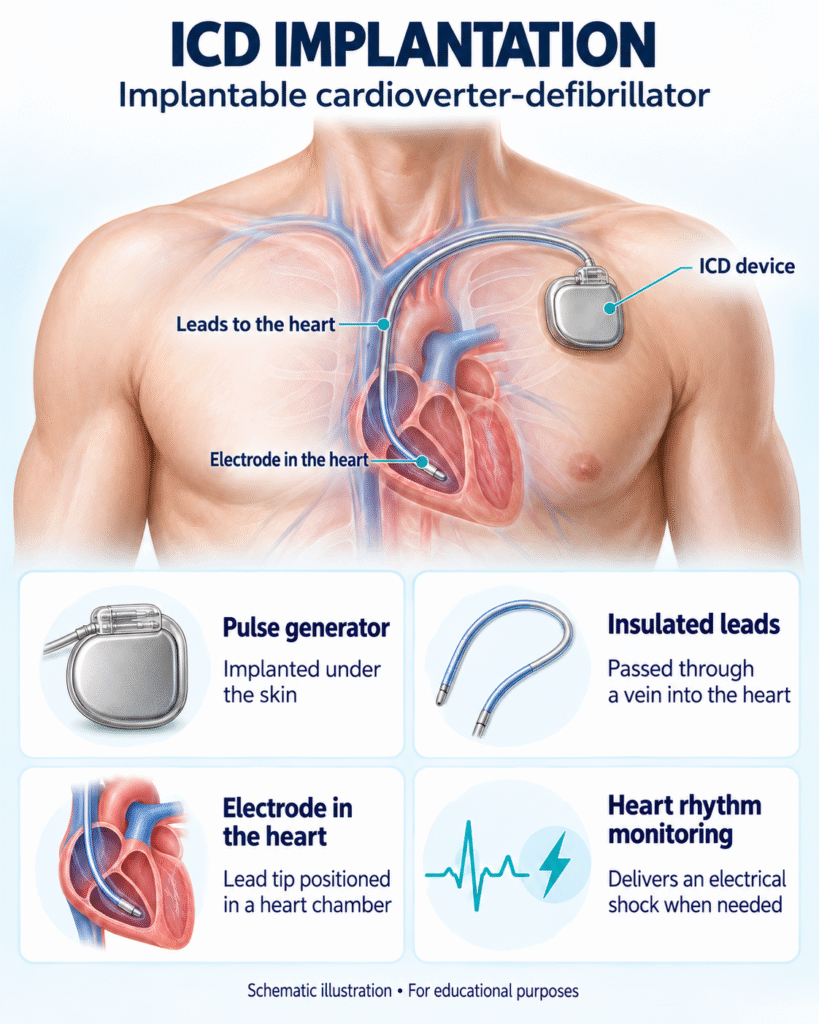
An ICD is a small electronic device implanted under the skin of the chest, usually below the collarbone. It continuously monitors the heart’s rhythm. If it detects a dangerous rhythm arising from the heart’s lower chambers, such as ventricular tachycardia or ventricular fibrillation, it can deliver electrical impulses or a shock to restore a normal rhythm. The treatments available depend on the type of device implanted.
According to the 2026 European guidelines, an ICD for primary prevention is considered in patients with heart failure with reduced ejection fraction who meet the following criteria:
- Left ventricular ejection fraction remains at 35% or below.
- Symptoms during physical activity correspond to NYHA functional class II–III.
- Heart function remains significantly impaired despite at least three months of optimal medical therapy.
- Expected survival exceeds one year with good functional status.
For eligible patients whose heart failure is caused by coronary artery disease, including previous heart attack, ICD implantation is recommended. For those with non-ischaemic heart failure, implantation should be considered following an individual assessment. Primary prevention implantation is not recommended within the first 40 days after a heart attack.
Optimal therapy means using recommended medicines at the highest tolerated doses. Patients do not have to reach the full target dose of every medicine to qualify for an ICD.
Assessing the response to treatment is important because heart function can improve considerably after medicines are introduced and adjusted. A single echocardiogram showing a low ejection fraction is therefore usually insufficient to make a final decision about preventive implantation. A follow-up echocardiogram helps establish whether a device is still needed.
Patients who have already survived a dangerous ventricular arrhythmia or a cardiac arrest caused by such an arrhythmia form a separate group. This is known as secondary prevention. Different criteria apply, including assessment of reversible causes and the expected benefit of treatment.
Some patients may benefit from a CRT-D, a device combining a defibrillator with cardiac resynchronisation therapy, which helps the heart’s lower chambers beat more effectively together. The choice of device also depends on the heart’s electrical activity, assessed using an ECG.
Before implantation, patients should receive a clear explanation of the expected benefits, the procedure and possible complications, including infection, bleeding or inappropriate shocks. An ICD is an addition to treatment: medicines and regular follow-up remain important after implantation.
At Dr Mačkić Clinic in Sarajevo, we assess patients with heart failure through a cardiology consultation, ECG, echocardiography and a review of their current treatment. This helps identify those who need further assessment for an ICD or CRT-D. When indicated, patients are referred for device implantation at an appropriate hospital centre.
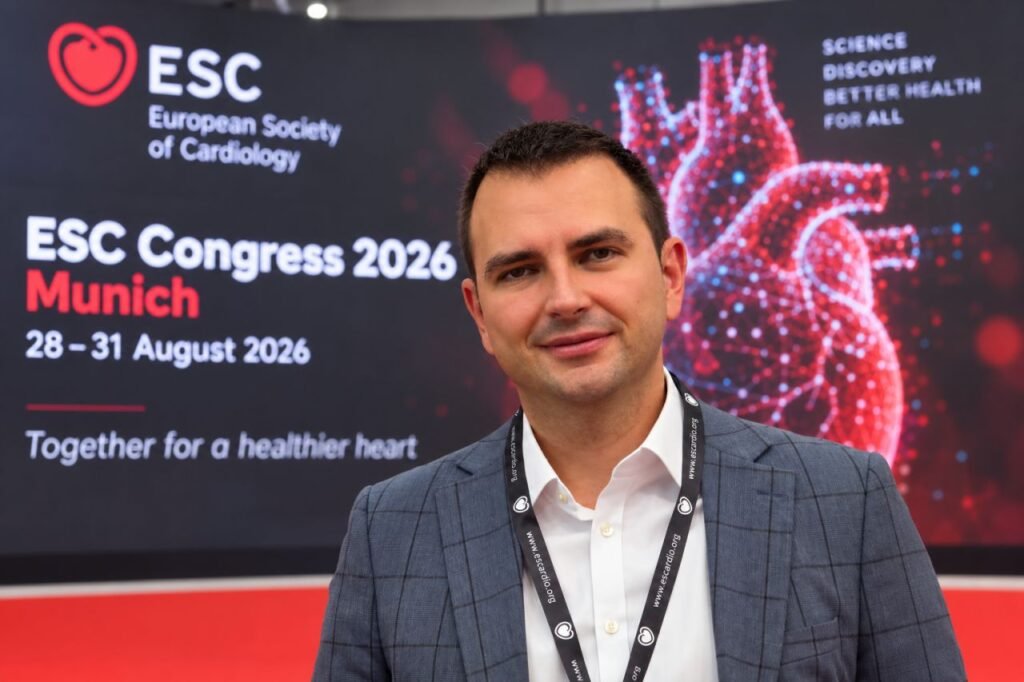
Consultations with Dr Vladimir Đurić, an electrophysiologist, are available at our clinic every month. An electrophysiologist is a cardiologist specialising in heart rhythm disorders. Patients can book an appointment to discuss whether they need an ICD or another cardiac device, together with the expected benefits and possible risks.
Patients who already have a pacemaker, ICD or CRT device can also arrange a device check, including assessment of battery status, lead function and recorded heart rhythm disturbances.
If you have heart failure and an ejection fraction of 35% or below, please bring your previous echocardiography reports, hospital discharge summaries and a current medication list to your appointment. These help us assess changes in your heart function and discuss the next steps in your care.
To find out the date of Dr Vladimir Đurić’s next visit and book an appointment, please contact Dr Mačkić Clinic.