

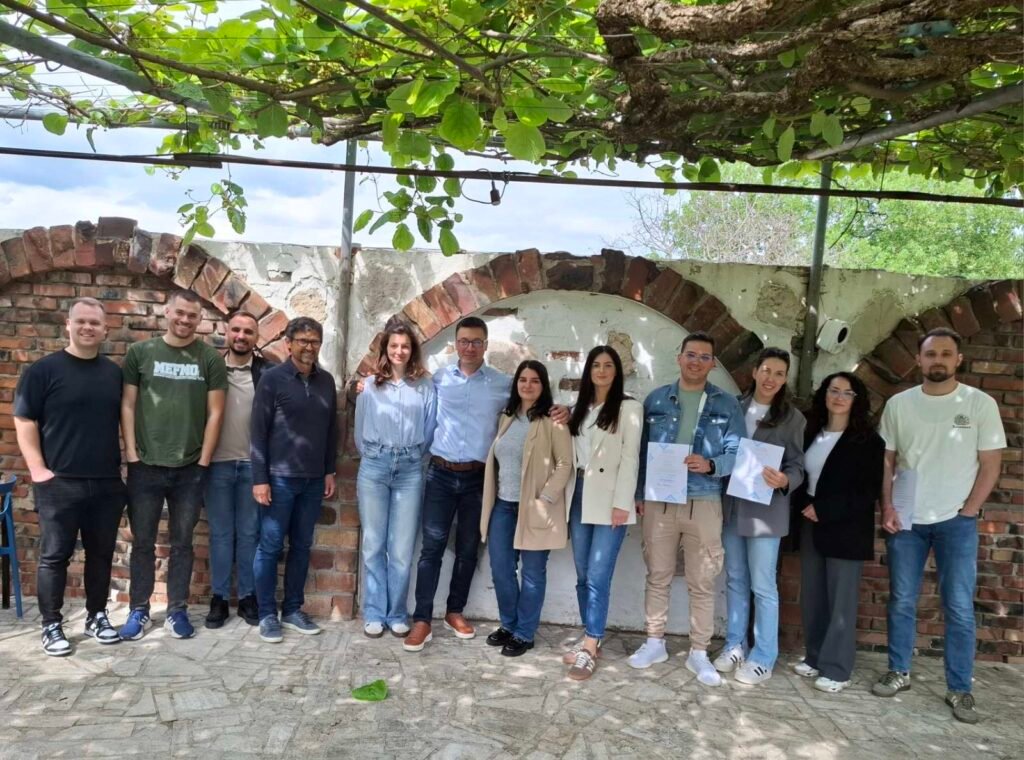
On Saturday, May 9, 2026, a professional workshop on POCUS ultrasound was held in Grude, organized by the Primary Health Care Center Grude, with the support of Bromabel, the official representative of Siemens Healthineers in Bosnia and Herzegovina.
The workshop was led by Mr Dr Milan Gluhović, specialist in internal medicine and cardiology, who provided participants with a practical and interactive introduction to the application of ultrasound at the point of care.
POCUS Ultrasound in Modern Clinical Practice
POCUS ultrasound, or Point-of-Care Ultrasound, is becoming an increasingly important part of daily clinical practice. It is especially valuable in primary care, emergency departments and outpatient settings, where fast and accurate assessment can support immediate clinical decision-making.
During the workshop, special emphasis was placed on the practical use of ultrasound in evaluating common clinical conditions such as dyspnea, chest pain, suspected heart failure, pleural effusion, free abdominal fluid and basic cardiac function.
Practical Training for Physicians from Herzegovina
Participants included physicians from primary care centers in the West Herzegovina Canton and the Herzegovina-Neretva Canton, giving the workshop an important regional dimension.
The training was specifically tailored for physicians working in primary health care, where rapid clinical assessment is crucial for proper patient management, timely referral and safer decision-making.
Hands-On Training with Siemens Ultrasound Technology
Thanks to the support of Bromabel, participants had the opportunity to work with advanced Siemens ultrasound systems and gain hands-on experience in realistic clinical scenarios.
The POCUS workshop was designed as a practical course with small-group training, live demonstrations and active participant involvement. This approach allowed physicians to directly practice ultrasound techniques relevant to everyday clinical work.
Key Topics Covered During the POCUS Workshop
The workshop focused on the most important POCUS applications for primary care and emergency assessment:
- FOCUS cardiac ultrasound – basic assessment of cardiac function, pericardial effusion and right ventricular size
- Lung ultrasound – identification of A-lines, B-lines, pleural effusion and ultrasound evaluation of dyspnea
- FAST protocol – rapid detection of free abdominal fluid in emergency situations
- POCUS in primary care – when and how ultrasound can support faster clinical decisions
Why POCUS Education Is Important in Primary Care
POCUS education is particularly valuable for family physicians, internists and emergency care providers. It can support faster triage, improve clinical assessment and help physicians make better decisions regarding further diagnostics, treatment and patient referral.
Introducing practical ultrasound training in primary care settings represents an important step toward modernizing healthcare delivery and strengthening diagnostic capabilities at the first point of patient contact.
Primary Health Care Center Grude as an Example of Best Practice
By organizing this workshop, the Primary Health Care Center Grude demonstrated a strong commitment to continuous medical education, the adoption of modern diagnostic methods and the improvement of patient care quality.
The POCUS workshop in Grude is a successful example of collaboration between a healthcare institution, a clinical expert and a company supporting the advancement of medical technology in Bosnia and Herzegovina.
Continuous Medical Education for Better Patient Care
The workshop held on May 9, 2026, in Grude confirmed the strong interest among physicians for practical and clinically applicable education programs.
Through this type of training, physicians gain valuable skills that can improve diagnostic accuracy, patient safety and the overall efficiency of the healthcare system.
Conclusion
The POCUS workshop in Grude provided physicians with practical knowledge in cardiac, lung and emergency ultrasound assessment. By bringing modern ultrasound education closer to primary care physicians, this training contributed to better clinical practice and improved patient care in the region.