
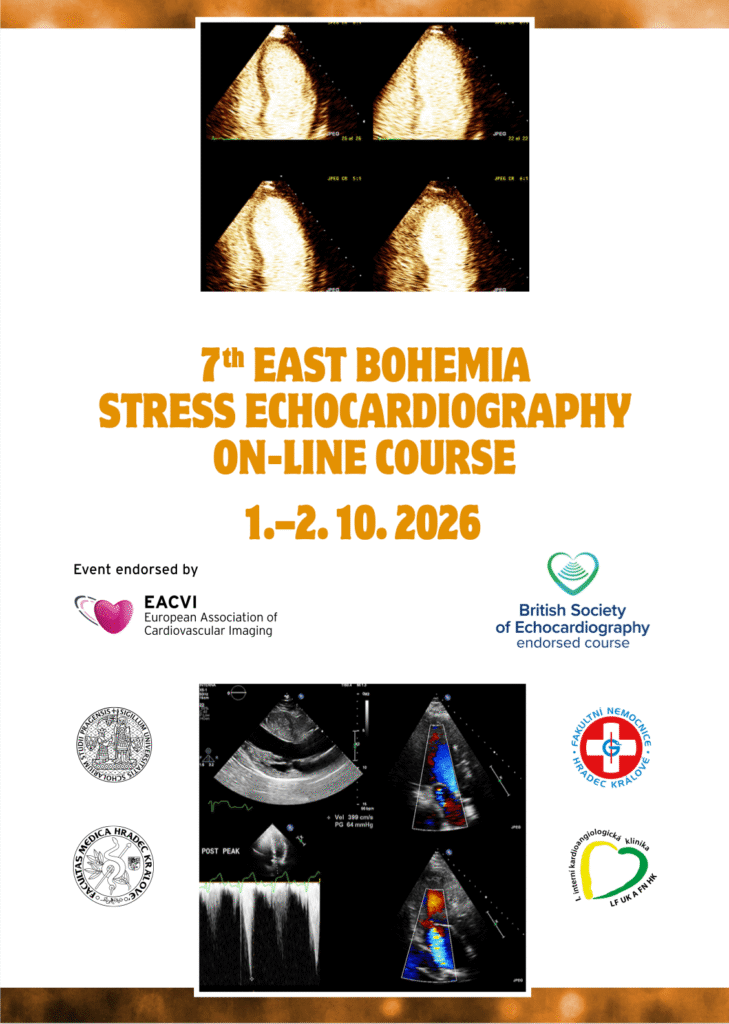
Dr Milan Gluhović, a specialist in internal medicine and subspecialist in cardiology, has completed the international online Stress Echocardiography Course 2026. Led by Dr Karel Medilek and delivered by an international faculty, the programme covered the use of stress echocardiography in assessing coronary artery disease, heart valve disease and diastolic heart function, alongside case discussions reflecting everyday clinical practice.
Continuing professional development is an integral part of our approach at Dr Mačkić Clinic in Sarajevo. For our patients, its value lies in the careful selection of diagnostic tests, high-quality examinations and interpretation of findings in the context of their symptoms and overall health.
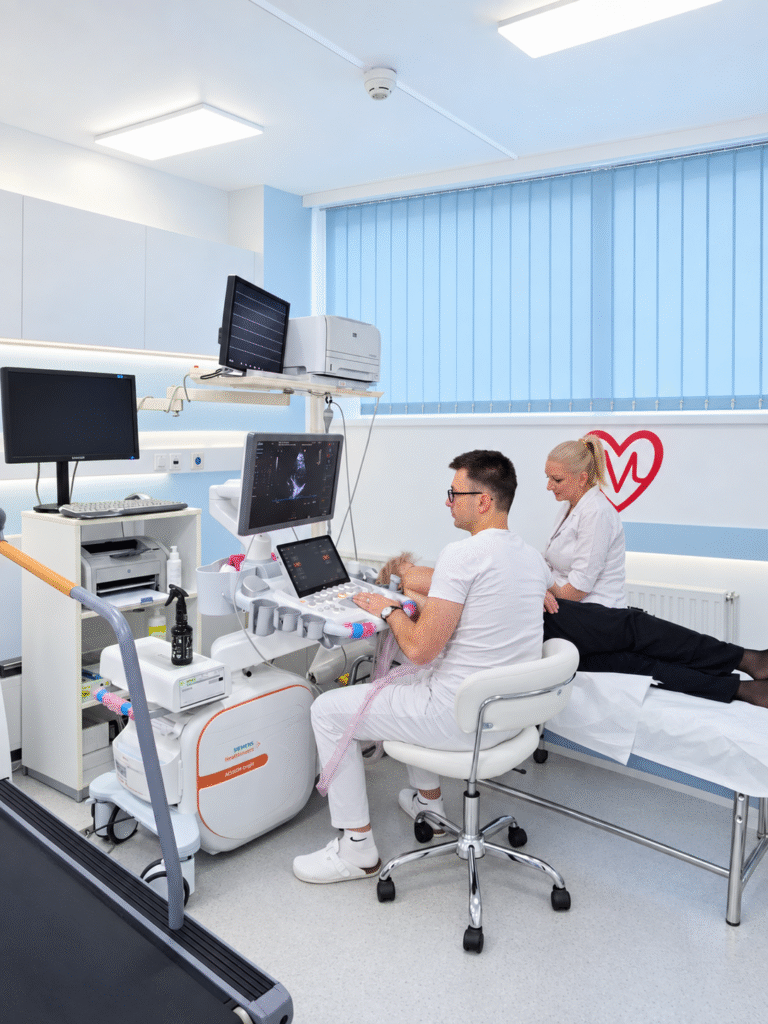
Symptoms such as breathlessness, fatigue or chest discomfort often occur during physical activity. A resting heart ultrasound may not always explain their cause. Stress echocardiography allows us to assess how the heart functions under stress, induced by exercise or medication. The examination uses ultrasound and does not involve exposure to ionising radiation.
Our clinic offers dobutamine stress echocardiography and diastolic stress testing, which address different clinical questions.
Dobutamine stress echocardiography involves ultrasound monitoring of the heart during the gradual administration of dobutamine, a medication that increases the heart’s rate and strength of contraction. Among its uses is the assessment of suspected inadequate blood supply to the heart muscle, particularly when a patient cannot achieve an appropriate level of physical exercise. In selected cases, it also provides additional information about the heart muscle and certain heart valve conditions. Ultrasound images, ECG, heart rate and blood pressure are monitored throughout the examination.
Diastolic stress testing assesses how the heart relaxes and fills with blood during physical exercise. It can be particularly useful for people with unexplained breathlessness and reduced exercise tolerance when resting investigations do not provide a clear answer. Echocardiographic measurements may reveal increased cardiac filling pressures during exercise and help evaluate suspected heart failure with preserved ejection fraction — HFpEF. Results are interpreted alongside symptoms, clinical examination and other findings; some patients may require further investigations.
The cardiologist selects the appropriate test after reviewing the patient’s symptoms, previous findings and any potential contraindications. Before the examination, patients receive individual instructions regarding preparation and their regular medication.
Our goal is to combine modern diagnostic methods and continuing education with attentive, personalised care for every patient.
For further information or to arrange a cardiology assessment and stress echocardiography examination, contact Dr Mačkić Clinic in Sarajevo through drmackic.ba.